
Žernovník
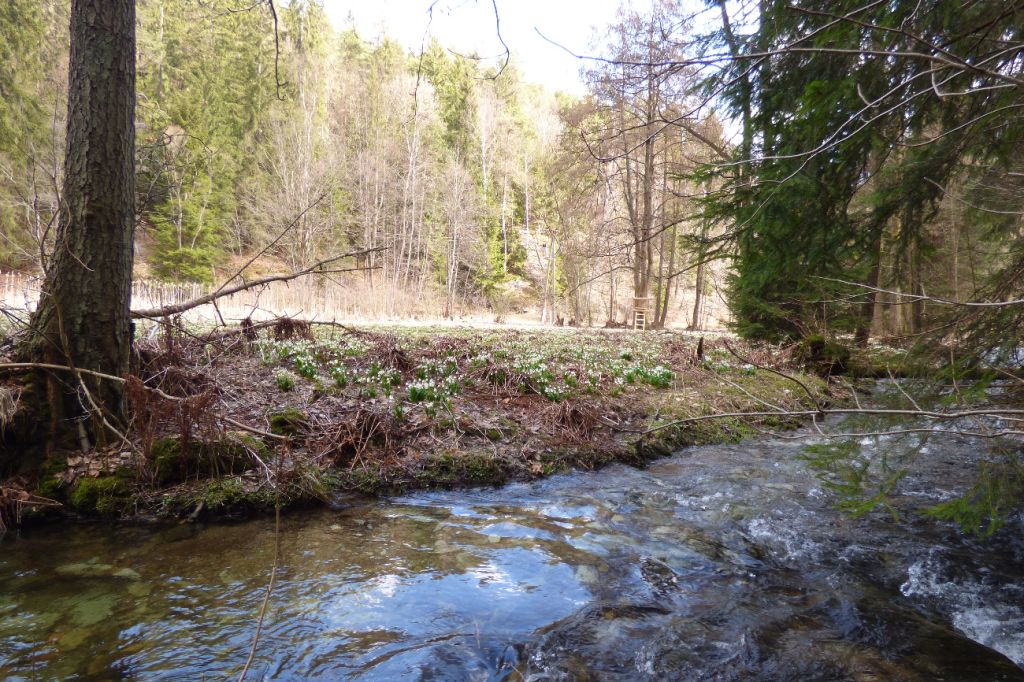
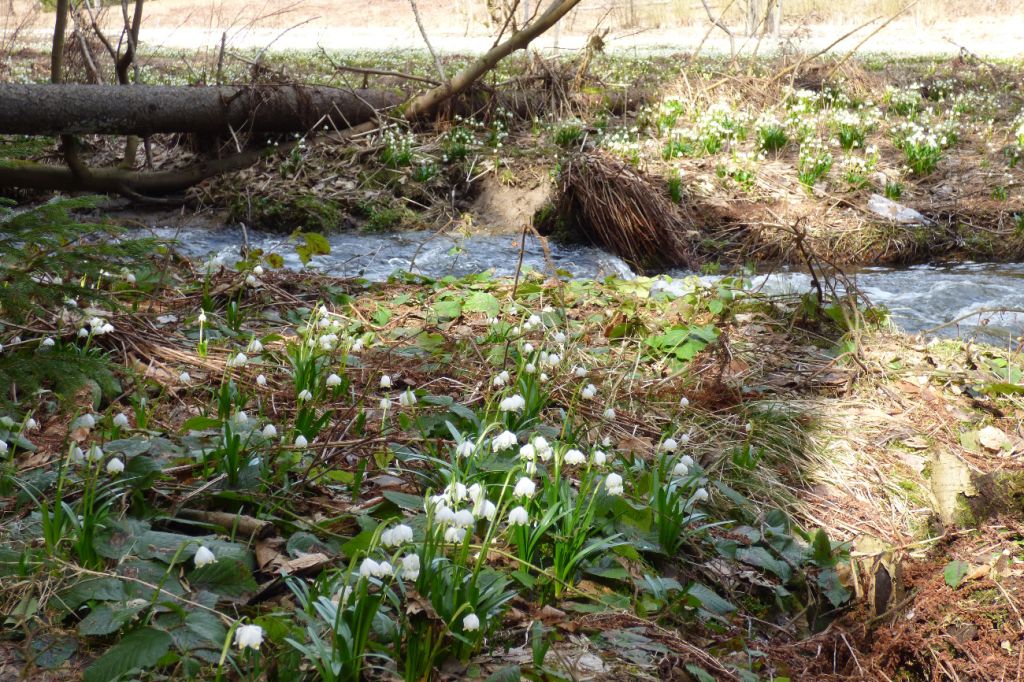
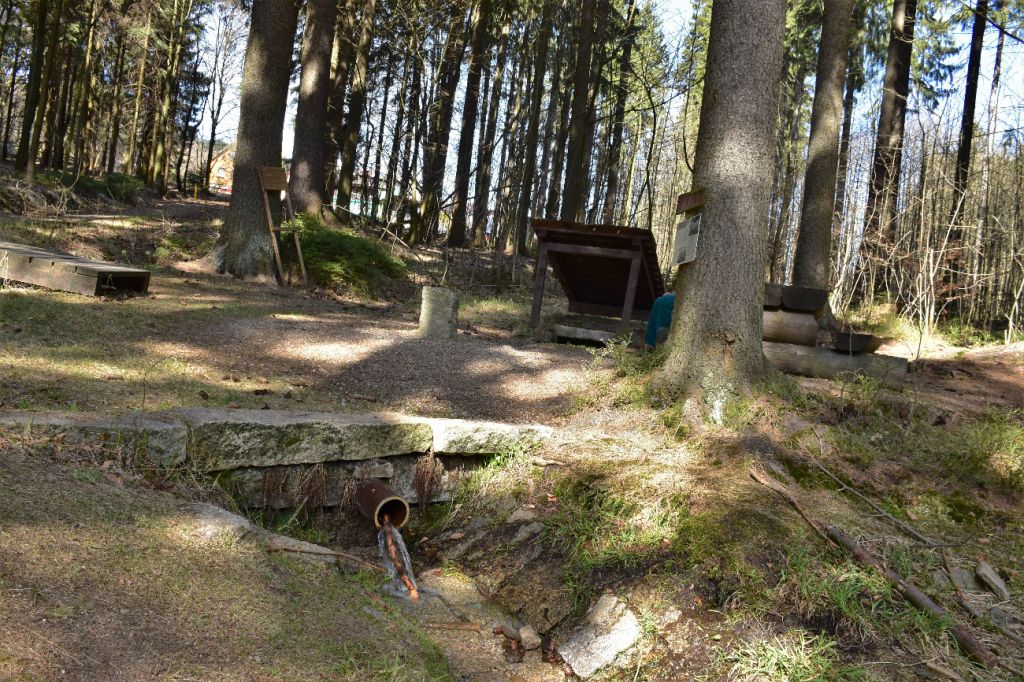
The second stop on our journey is the springs of the Žernovník stream, which rises along the old road from Jablonec nad Nisou towards Huta.
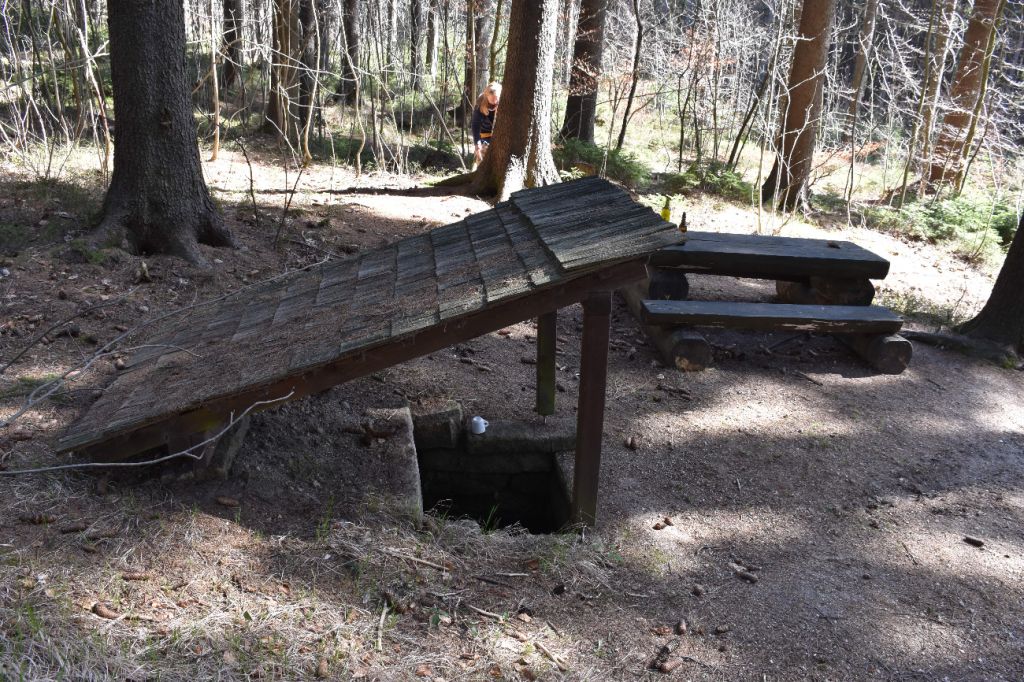
The stream well has had a reputation for healing water since time immemorial. As late as the early 1880s, it was surrounded by massive beech trees, whose trunks were covered with votive images. The place was carefully maintained, because near the spring stood the Sacrificial Stone, in which the German population saw an ancient altar of their Germanic ancestors. However, the estate administration had no sense for the romance of a small pilgrimage site, for the protection of the mature greenery, or for Germanic mythology. It sold the sacrificial stone to stonemasons, and the massive beech trees ended up in the estate's sawmill.
This is a place of common regional mythology. In addition to the aforementioned Sacrificial Stone, the locality is also associated with the legend of the Skeleton. According to it, a wounded soldier wandered into the spring during the Silesian Wars and fell into a narrow, deep shaft with clean water. This threatened to pollute the spring and spread the plague. However, the nearby doctor Kittel used a magic spell to make the water boil all night; in the morning, only a white skeleton remained and the danger was averted.
Similar rumors about the discovery of dead soldiers are also common in the Zittau Mountains area.
The area is also associated with archaeological finds, as only a few kilometers away, in the Jistebsko and Velké Hamry, are the largest known Neolithic mining areas in the Jizera Mountains. It was here that exceptionally hard amphibole metabasite was mined in the 6th millennium BC, from which highly valued stone axes and other ground tools were made. Research has proven the existence of thousands of mining pits, production sites with fireplaces and a huge amount of chipped industry, which proves the specialized and long-term production of these tools. It is therefore likely that the ancient paths leading around the springs of Žernovník knew the steps of people who participated in these production centers, or at least passed through them. Neolithic axes from the Jizera Mountains were subsequently distributed to a wide area and appear in many settlements in Bohemia, Moravia and neighboring countries; they represent silent evidence that even this seemingly remote spring basin was part of long-distance contacts and production circuits of prehistoric times.