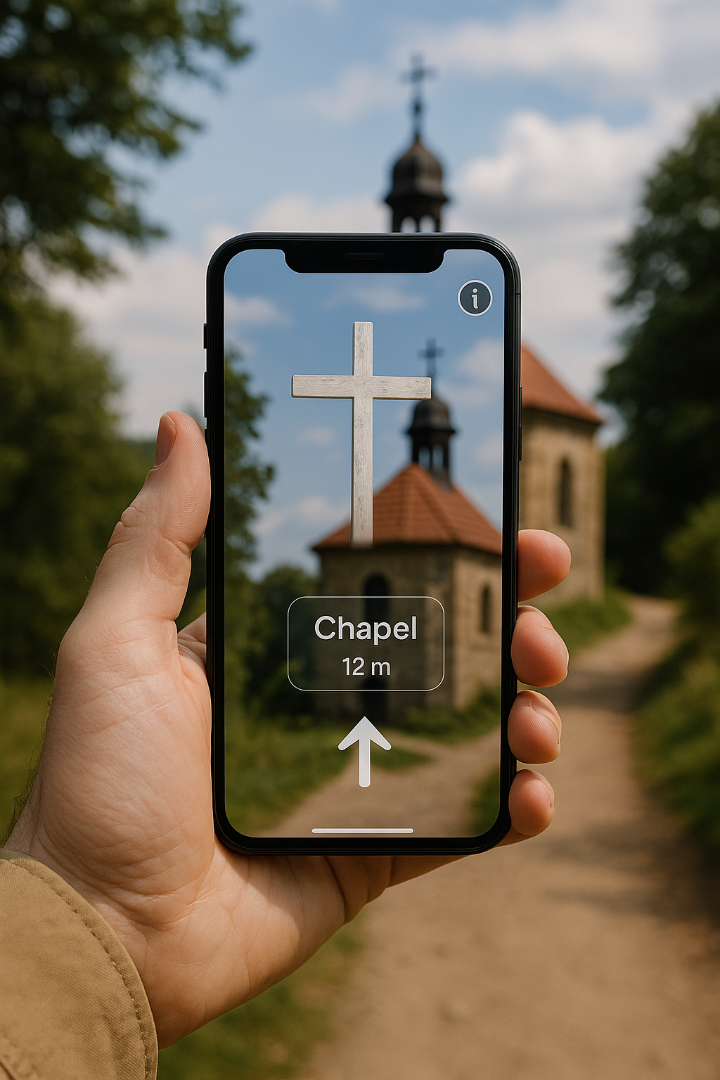

Augmented reality in the project
Augmented reality (AR) is a technology that connects the real world with digital content. Using a mobile phone or tablet, it allows visitors to see what is not visible to the naked eye – for example, extinct buildings, historical layers of the landscape or additional information. Unlike traditional exhibition methods, AR does not create a barrier between a person and a place, but on the contrary enriches their perception directly on the spot.
In the world of museums and cultural institutions, augmented reality serves not only to supplement classic exhibitions, but also to create completely new experiences - often in the form of interactive guides that react to the visitor's movement, recognize objects or allow the original appearance of monuments to be displayed.
On our cross-border pilgrimage trail, we use augmented reality as a tool that allows visitors to immerse themselves in the stories of individual stops without the need to disturb the landscape with physical information boards. Using a mobile application, pilgrims can learn about the historical and spiritual significance of places, view extinct buildings or their digital reconstructions - all directly in the field and at their own pace.
This approach preserves the authenticity and tranquility of the environment while opening up new possibilities for connecting the memory of the place with contemporary digital tools.