
Töpfer / Tempelwand / Hrnčíř, 582 m
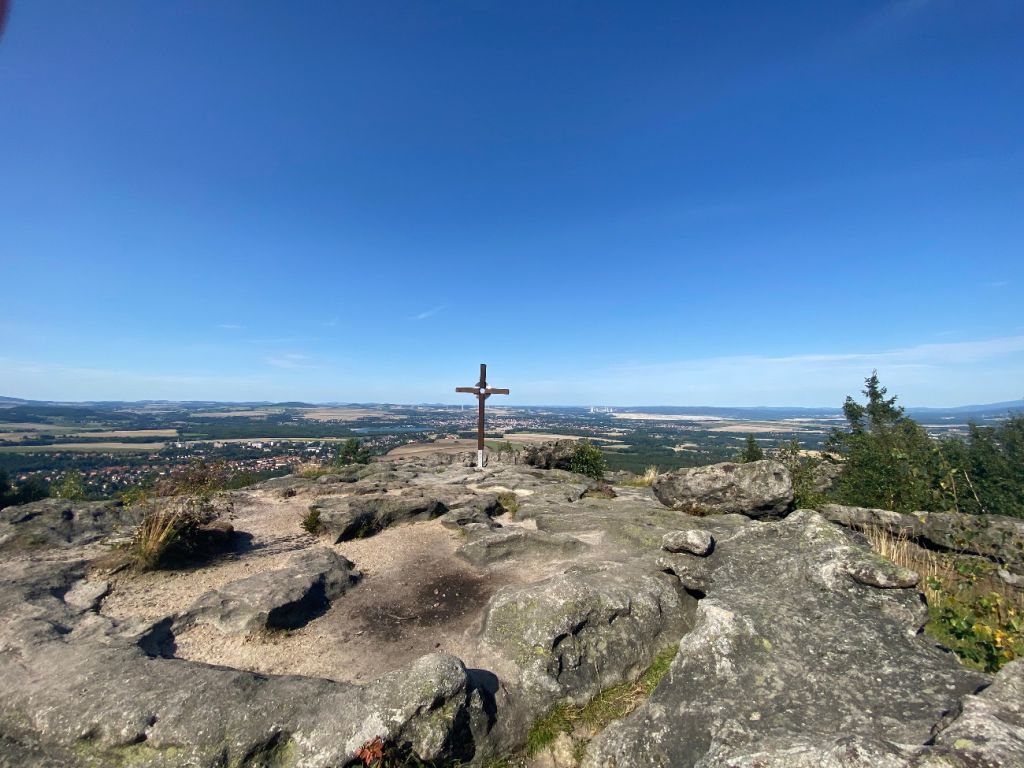
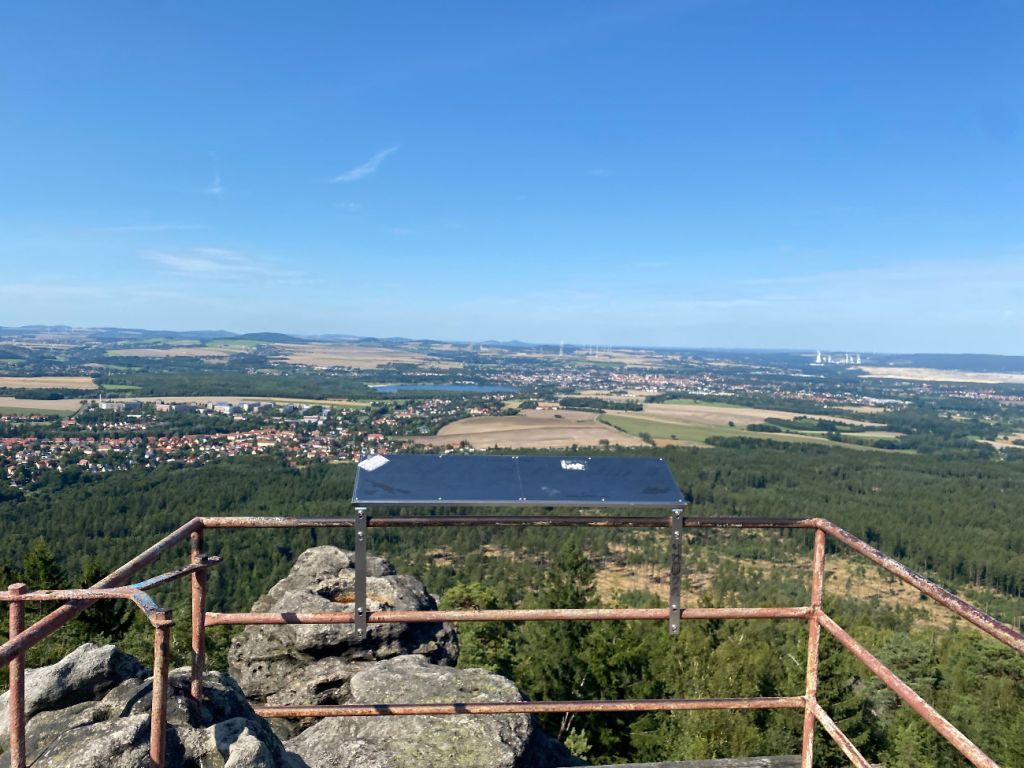
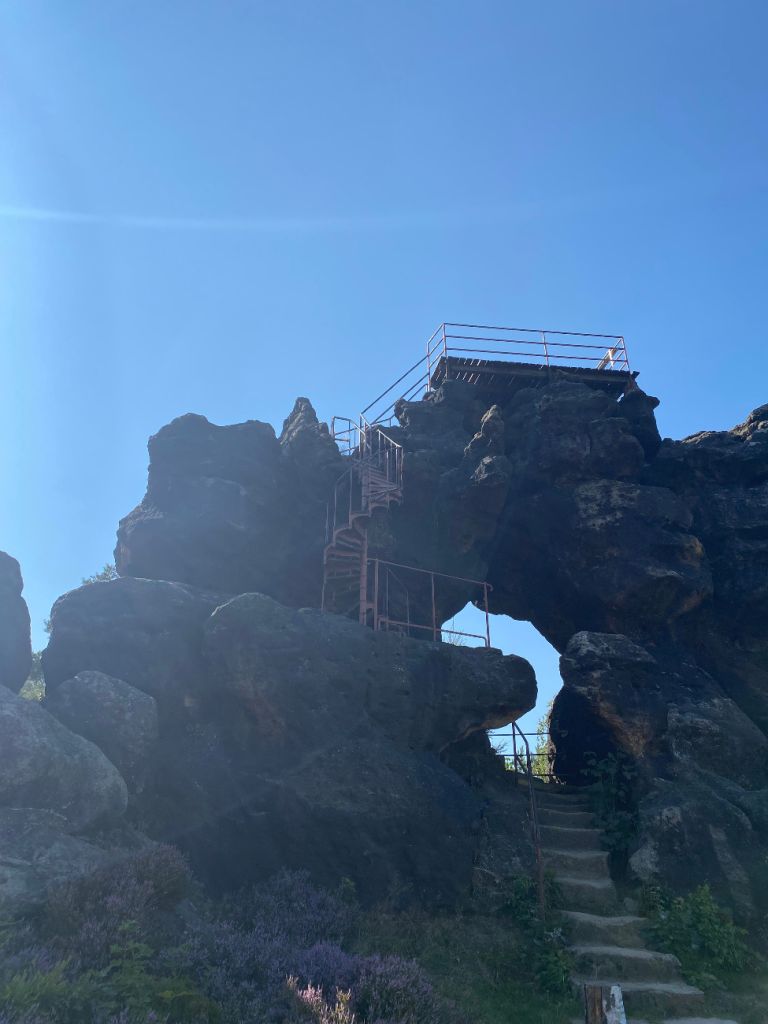
Töpfer is one of the most beautiful hills in the Zittau Mountains. According to legend, the rocky plateau on its northern side was a cult site of the ancient Germans or Slavs as early as the Bronze Age. This was inferred from the existence of several round rock bowls, which were assumed to have been hollowed out for sacrificial ceremonies, and were only later proven to have been formed by natural erosion of the sandstone. It is also sometimes stated that the rocky plateau could have been used in ancient times as a signal point, where fires visible from afar were lit to warn of danger.
In 1369, Emperor Charles IV donated the mountain to the Cistercian monastery of Oybin . The mountain was mentioned in a monastic charter as "Tepper".
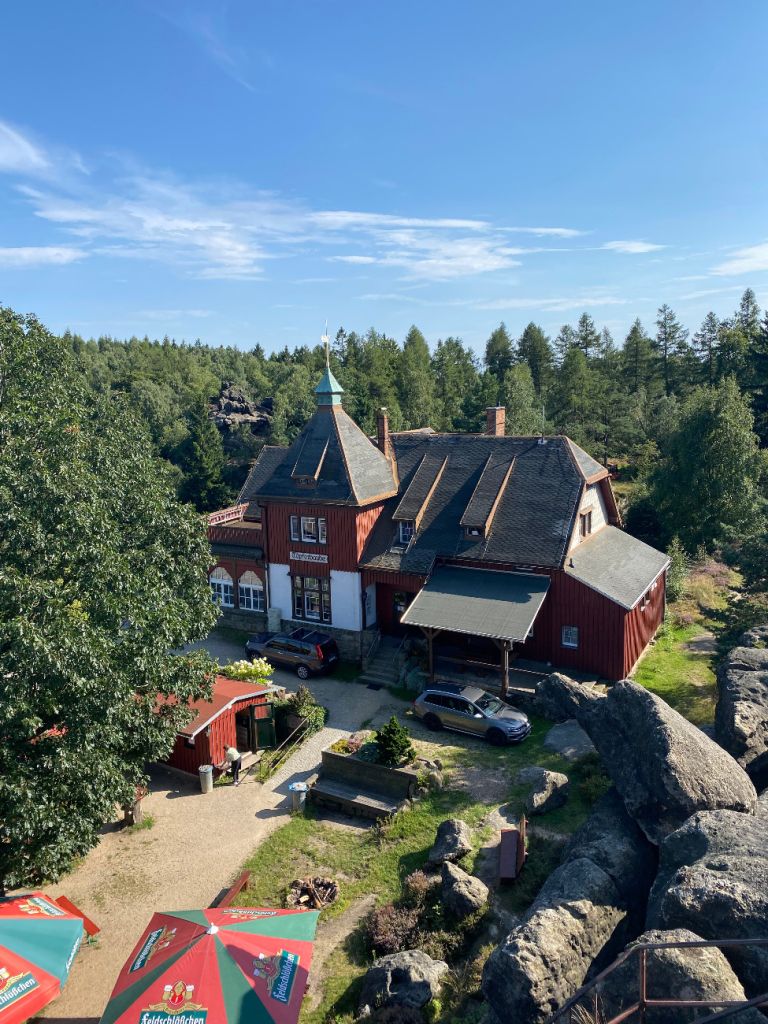
In 1574, the mountain was acquired by the city of Zittau. In 1831, it was considered that a so-called constitution column would be erected on the mountain in honor of the Saxon constitution , but it was eventually built in Zittau. A mountain meeting of 18 singing associations from Lusatia and northern Bohemia on Töpfer, which at that time still had no catering facilities, decided that the municipal council of Olbersdorf asked the mayor of Zittau to build a "small mountain hut". In 1860, the first mountain hut was built and at the same time the first mountain guide was published. In 1876, the mountain hut had to be expanded due to the ever-increasing number of visitors. After a fire caused by lightning in 1903, the building was reopened in its current form just a year later, and the Lusatian and Zittau Mountains International Nature Trail has been running over the peak for several years.