
The municipality of Proseč pod Ještědem consists of the villages of Proseč pod Ještědem, Domaslavice, Horka, Javorník and Padouchov. The municipality was first documented in writing in 1539. In 1547, there were 13 settlers with a magistrate, i.e. at the time when the estates and property of Adam of Vartenberk were confiscated in favor of the monarch for rebellion against King Ferdinand I. The entry in the Land Records lists the villages belonging to the "Castle Oak" (Český Dub) and among them Proseč together with the villages of Padouchov and Domaslavice (Javorník is mentioned in 1548). Colonization of this area took place, but already in the mid-12th century. Proseč is known for the occurrence of precious stones, agates, brownstones, jaspers and chalcedony were mined in two quarries.
Waterfall
The eight-meter Ještěd Waterfall in the Basa locality is an artificial waterfall created after mining in a quarry, located near the green tourist path (Cesta K. Světlá) south of the peak of Ještěd. The waterfall is very poor in water, vodopády.info states that it operates only a few days a year, usually after rains or thaws, and is part of the Ještěd Nature Park.
Prosecký mountain
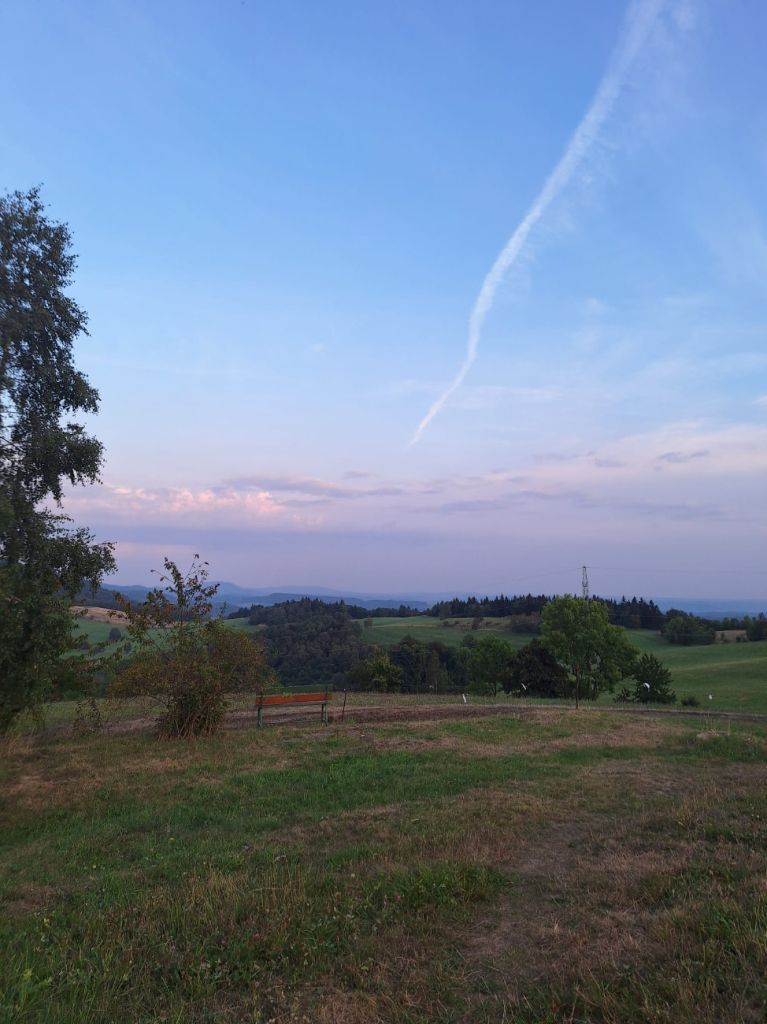
From the ridge itself, called "Prosecký Hora" in the Podještěd dialect, from the Šámalů inn, picturesque views of the region from the Krkonoše Mountains to the České Středohoří Mountains open up to us.
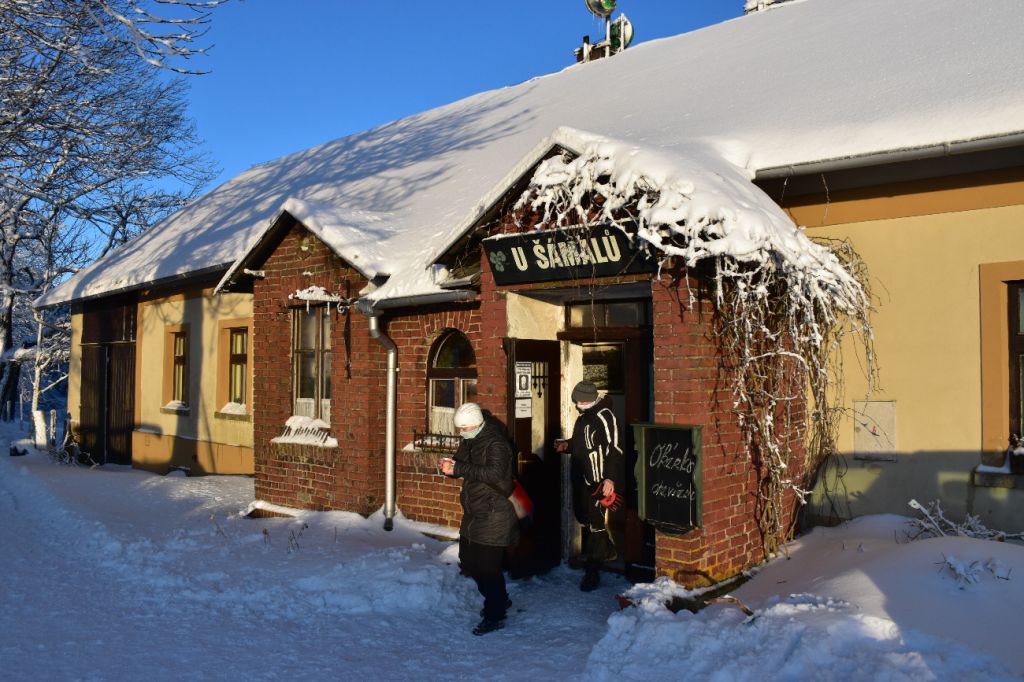
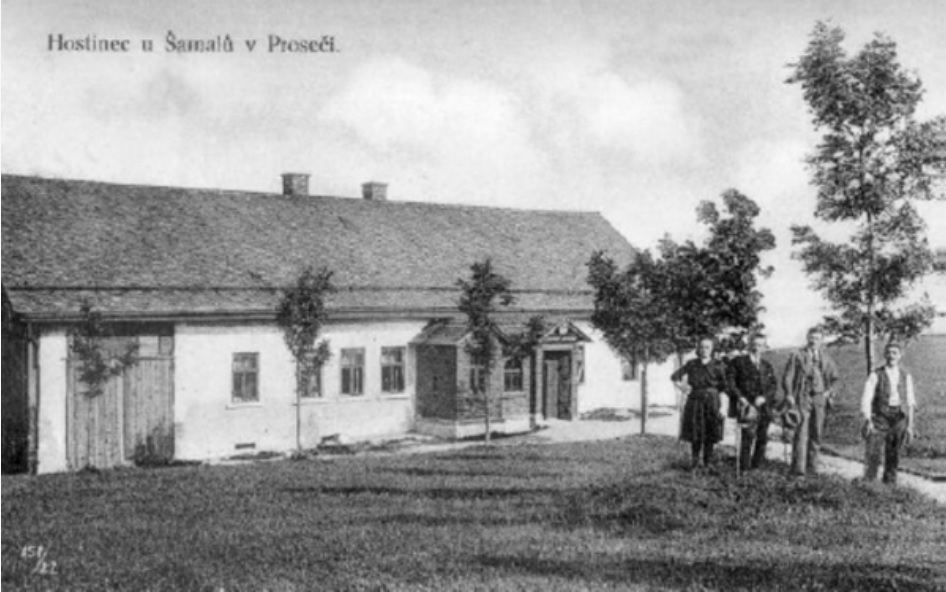
In the U Šámalů inn high above Prosečí, nothing seems to have changed since World War I; it is one of the most pleasant refreshment places in Ještědí. The innkeeper Sváťa Koudela and his wife tenaciously hold on here in the shade of twisted maples, on the border of meadows and forests. The inn remembers ancient times, it was last renovated in 1928 and has retained its rough, honest face since then. Even from afar, you can smell the scent of horses, Svijanské beer, goat's bay leaves, and in summer, blooming meadows and tarry forests. A mountain tavern owner with an ancestral hat leans out of a wooden taproom, on the walls there is quiet and noble patriotism: a map of the Czechoslovak Republic, a picture of the TGM and photos of Austrian mountain hunters. U Šámalů is beautiful in the summer, you can lie here with a beer on the fragrant meadow behind the pub, the sun is shining and the meadow is decorated with the green-and-white stars of the Jěště August. At your feet lie the Jizera Mountains, the Bohemian Paradise, the Ralsko, Říp, Bezděz and the Giant Mountains. The triangular peak of Sněžka can be seen even through the small window of the inn's huts. The building of the U Šámalů inn, as it is known to today's tourists, has retained its appearance from 1911. However, a wooden cottage had already stood here before. In 1864, Antonín Šámal from Hluboká bought it with his wife Klára; in that year he was still allowed to run an inn here. The pub was also named after this man and has retained its name to this day - despite all the changes of owners. In 1911, one of the other innkeepers - Josef Lank - rebuilt the previously wooden vestibule into a brick one and expanded it. The new hall floor, made of walnut parquet, also dates from this time. However, the ceiling of the hall was low at the time, so the innkeeper decided to rebuild. He invited a carpenter, a well-known expert in bindings and timbering, "old Podborovák". A wooden "gallery" for music was built inside the hall and an ash tree row was planted in front of the pub. Later, the inn was run by the bartender Josef Kotek, and during the First Republic, the composer Karel Vacek also came here, who was in frequent written contact with local musicians. From 1943 until the end of World War II, the U Šámalů inn was closed by order of the authorities. The post-war period was not kind to the inn, the 1950s were critical, and in 1958 the inn was closed down. It was not until the 1990s that the inn business at U Šámalů was partially revived (weekend operation) by Svatopluk Koudela, a native of Proseč, originally from the Koubšův rychta, with roots dating back to the 16th century. Thanks to the tolerance of his wife and the help of many friends, he opened the inn in freezing January 1998 after a long forty-year break. No one who really wants to get to know Ještěd and its old traditions should miss a visit to the U Šámalů inn.
The consecrated stone chair is here in memory of the sculpture of St. Joseph, demolished in 1958 in Proseč pod Ještěd, where it stood "at the Koubšů".
In good weather, you can enjoy a beautiful view of the surroundings - from the Jizera Mountains through Trosky and Bezděz to the Ralsko region. It is a popular place for tourists, wedding ceremonies and masses are held here, and the traditional Midsummer Pilgrimage is held every year in June. You can then climb the ridge via the cottage in Plány to the top of Ještěd.
New forest
It is located on the southern slopes of the Ještěd Ridge, 800 m from the cottage in Plány pod Ještěd. The New Primeval Forest is a unique project in Central Europe, emerging near Ještěd in northern Bohemia. Since 2004, the non-profit organization Čmelák - Society of Friends of Nature zs has been transforming spruce monocultures into a full-fledged, colorful forest that is fresh, colorful and full of life. The forest as it should be. A Czech-German nature trail runs through the oldest part. How to get to the nature trail? See. link: www.novyprales.cz/naucna-stezka
The following tips are intended for pilgrims who would like to descend from the mountain ridge, where our trail leads, directly to the village located on a steep slope falling from the Ještěd Ridge.
Škoda's house no. 129 and the crucifix south of this house
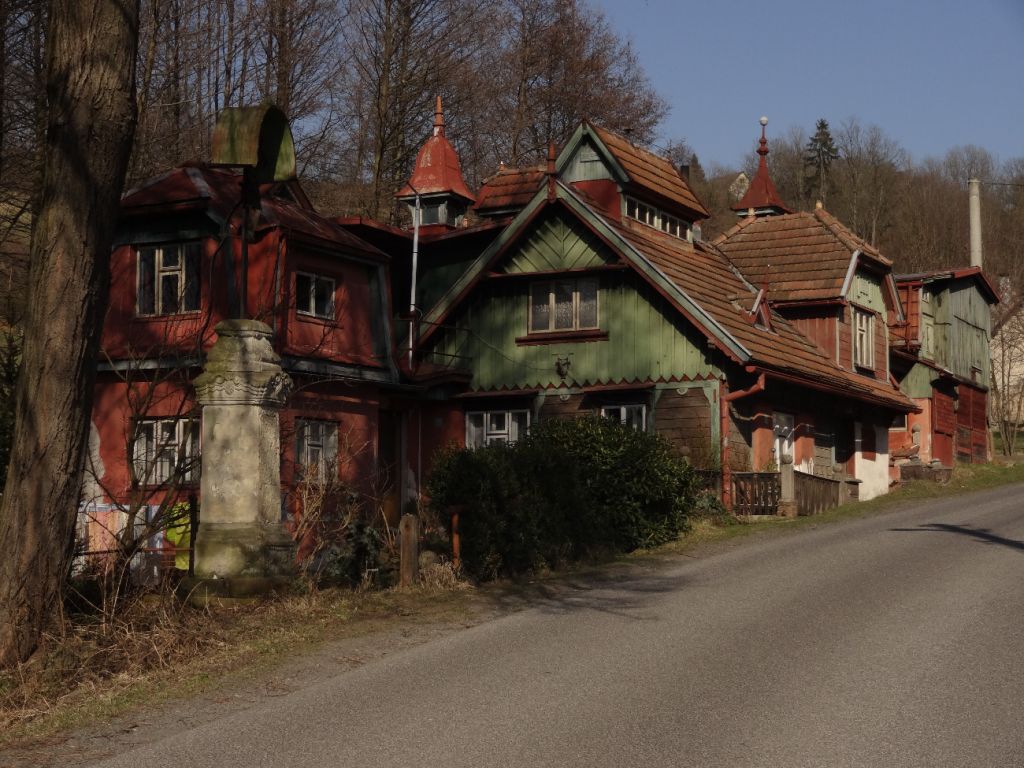
The unmissable Škoda House, No. 129, stands by the main road, roughly in the middle of the village, closer to its lower end. It was rebuilt into its current, bizarre form by its owners – skilled joiners and carpenters – in the period between the world wars.
The crucifix south of Škoda's house is located by the main road. The cross was built on his land in 1829 by Antonín Sluka and, according to the preserved inscription, was made by Václav Škoda from No. 71. The cross was restored in 1935 and the wooden fence with stone posts was probably built at that time.
Chapel of the Holy Trinity
The Proseč Chapel on Hoření Proseč is located in the oldest part of the village. It is dedicated to the Holy Trinity and is used to ring the "Ave Maria" bell. It was probably built in the second half of the 18th century and is one of the few similar buildings to have retained its original appearance, intact even after numerous later repairs. The chapel is a unique document of the original development in the village and a testament to local folk piety.